In the simplest terms, data migration means moving information. This includes transferring information to a different location, database, or data center, application, environment, or system. Large data volumes, variations in data types, and maintaining the necessary security, encryption, and regulatory requirements increase the complexity of enterprise data migration projects.
As Gartner explains, “These projects often involve many data sources, underlying technologies, and massive volumes of data. As a result, they can disrupt many systems and processes that are indirect producers or consumers of the data being migrated.”
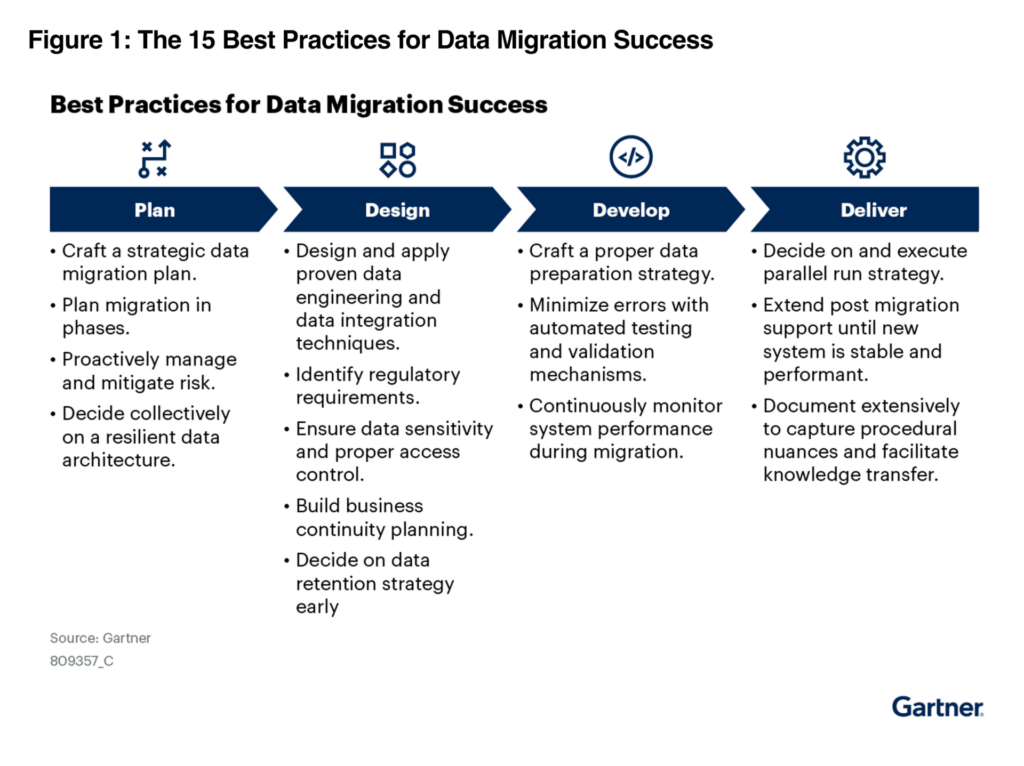
In this research, Gartner outlines the best practices for data migrations, categorized into four phases: planning, design, development, and delivery.